Sealed-handi Awadhi biryani — what actually sets it apart
Dum cooking, a dough seal, and a flavour profile that leans aromatic instead of loud. A short primer on the style we cook.
Biryani is one word that covers a lot of ground — Hyderabadi, Kolkata, Ambur, Thalassery, Sindhi. Ours is Awadhi. It is the style that came out of the royal kitchens of Lucknow in the nineteenth century and it earns its place on a table for one specific reason: it is cooked inside a sealed pot. Not open on a flame, not finished in an oven — sealed with a rope of dough and left to finish in its own steam.
What sealed-handi cooking actually is
“Dum” means breath, or held breath. In practice, the rice and meat go into a heavy-bottomed clay or brass pot — the handi — in layers, with saffron milk, ghee, fried onions and whole spices between them. The rim is then closed with a rope of wheat dough. The pot sits over the lowest possible fire, sometimes with hot coals on the lid, for the last stretch of cooking.
Because the seal cannot vent, everything cooks in trapped steam. The rice absorbs the aromatics rather than the pot losing them to the air. When you break the seal at the table, the smell is the first thing that lands — and that smell is the point.
A flavour profile that leans quiet
Awadhi is not chilli-forward. The spice bill is long — saffron, green cardamom, mace, cloves, cinnamon, bay, kewra — but the heat register is low. What you taste is layers, not a single hot note. Guests who ask “is it very spicy?” before ordering are usually pleasantly surprised.
The meat is marinated overnight in yoghurt and the same spice blend, then par-cooked briefly before it goes into the handi. By the time the seal is broken, chicken has picked up saffron and rose water without ever tasting perfumed.
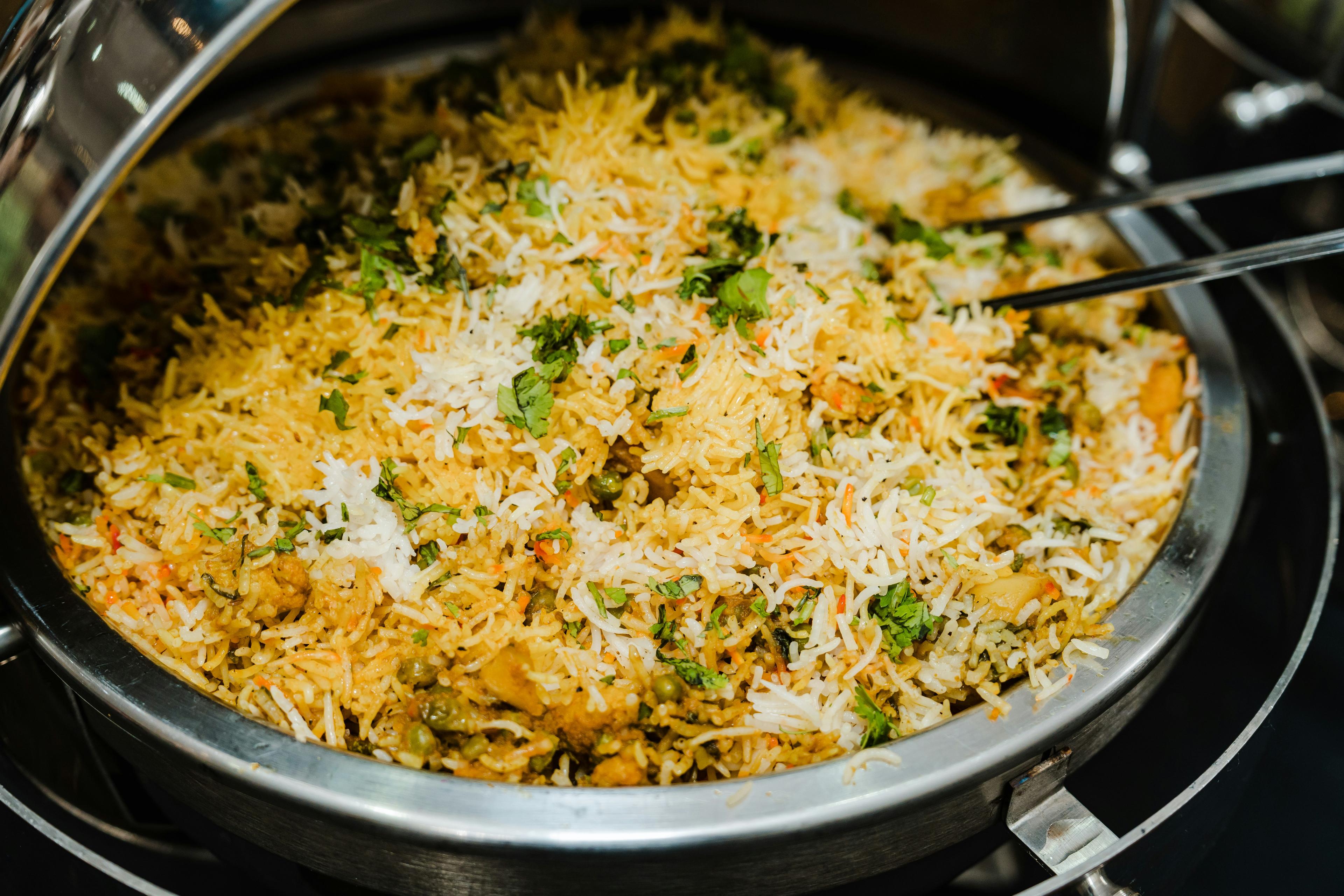
A sealed handi on the last stretch of dum
Awadhi vs Hyderabadi vs Kolkata — a short comparison
People often ask which one is “the best.” They are different, not ranked.
- Awadhi (Lucknow) — sealed handi, dum-cooked, aromatic. Chicken or mutton par-cooked in a yoghurt-and-spice marinade, layered with saffron rice, sealed with dough. Mild heat, deep aroma.
- Hyderabadi — the classic kachchi variant layers raw marinated meat directly with soaked rice and cooks it all together under a sealed lid. Chilli-heat and tang from yoghurt are more forward.
- Kolkata — an offshoot of the Awadhi tradition that carried east with the exiled Nawab Wajid Ali Shah. Milder still, and famous for including a piece of boiled potato and sometimes egg alongside the meat.
Why the seal matters for catering
The practical case for sealed-handi cooking, beyond taste, is that it holds. The dough seal traps moisture and aroma even after the pot leaves the fire. A handi that finishes cooking at noon arrives at your address at 13:30 without drying out and without needing a re-heat. The seal is broken at the table, not in a van.
For weddings and parties, that is the difference between “biryani that tasted like biryani” and “biryani that was reheated somewhere.” It is why we still cook this way and why we still deliver the pot sealed.
Frequently asked
- What makes Awadhi biryani different from other biryani styles?
- Awadhi biryani is cooked using the dum method inside a dough-sealed handi. The flavour profile is aromatic and layered — saffron, cardamom, cloves — rather than heavy on chilli. Hyderabadi biryani is spicier and tangier from yogurt and chillies; Kolkata biryani leans milder but adds boiled potato and egg.
- What does "sealed-handi" or "dum" cooking actually mean?
- The pot (handi) is filled with layered marinated meat and par-cooked rice, then sealed at the rim with a rope of dough. It cooks slowly over low heat so the rice finishes in its own trapped steam. The seal is broken only at the table.
- Is Awadhi biryani spicy?
- Not in the chilli-heat sense. It's deeply flavoured — saffron, mace, cardamom, kewra — but the heat register is low. And because a dum handi cooks in layers (aromatic saffron rice on top, marinated meat and richer masala settling towards the bottom), the same pot can serve mild, medium or slightly hot plates depending on where the server scoops from. Serving dum biryani well is an art in itself: a lighter spoon from the top for guests who prefer mild, a deeper one from the base for those who want it hotter — all from one handi.
- Why is sealed-handi biryani good for catering?
- The sealed pot holds temperature and aroma for hours, so the handi that leaves the kitchen at 12:00 still smells and tastes right at 14:00. It also travels intact — no drying out, no re-heat hit on flavour.
- Can I get a vegetarian sealed-handi biryani?
- Yes. We cook a veg handi and a kathal (jackfruit) handi to the same sealed-dum technique as the chicken. Same aromatics, same rice, same seal.
Sealed at 08:00, opened at your table.
Chicken, veg and kathal handis in 1 kg, 2 kg and 4 kg sizes. Free 10 km delivery on orders ₹1,500+. Four hours’ notice.
Order on WhatsApp